

By Carolé Dacey Young | NFL Alumni Health
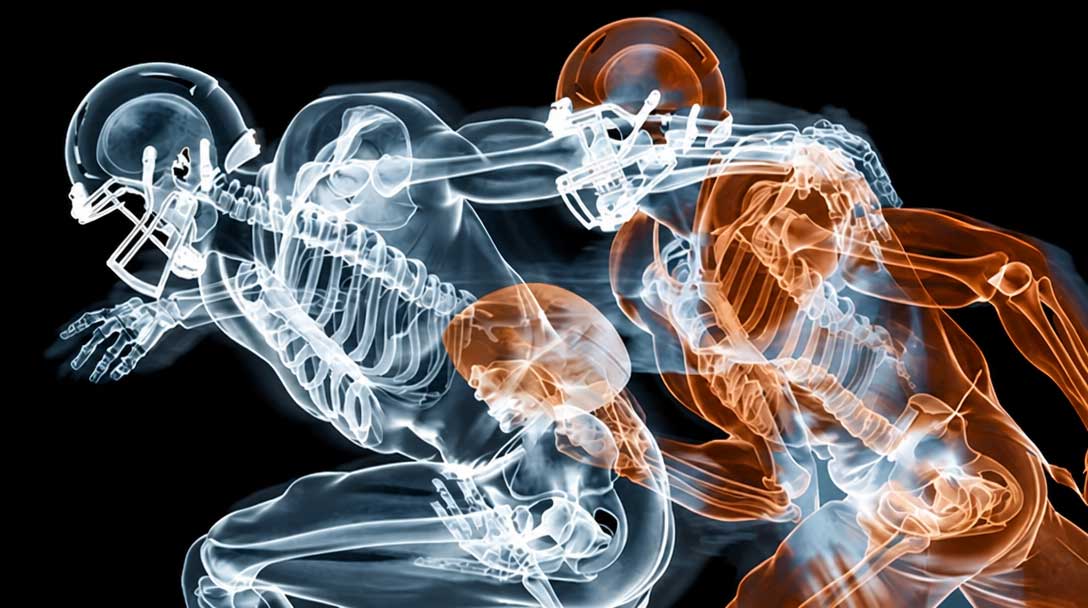
In October, Dr. Steve Sampson shared a quote with us for World Stem Cell Day. We sat down with him to go deeper on what regenerative medicine can and cannot do for former players, how blood sugar and weight fit in, and how to find care you can trust.
For anyone who spent years on a professional football field, the physical toll of the game is no secret. Collisions, torn ligaments, damaged menisci and the relentless demands of competition can leave their mark long after the final whistle. For many NFL alumni, retirement brings a different kind of challenge: managing persistent knee, hip, shoulder and back pain while trying to remain active and independent.
When conventional approaches no longer provide enough relief, regenerative medicine may sound like a promising next play. But can these treatments actually repair damaged joints? Can they delay surgery? And with so many clinics marketing the latest breakthrough, how can former players distinguish legitimate medical options from exaggerated promises?
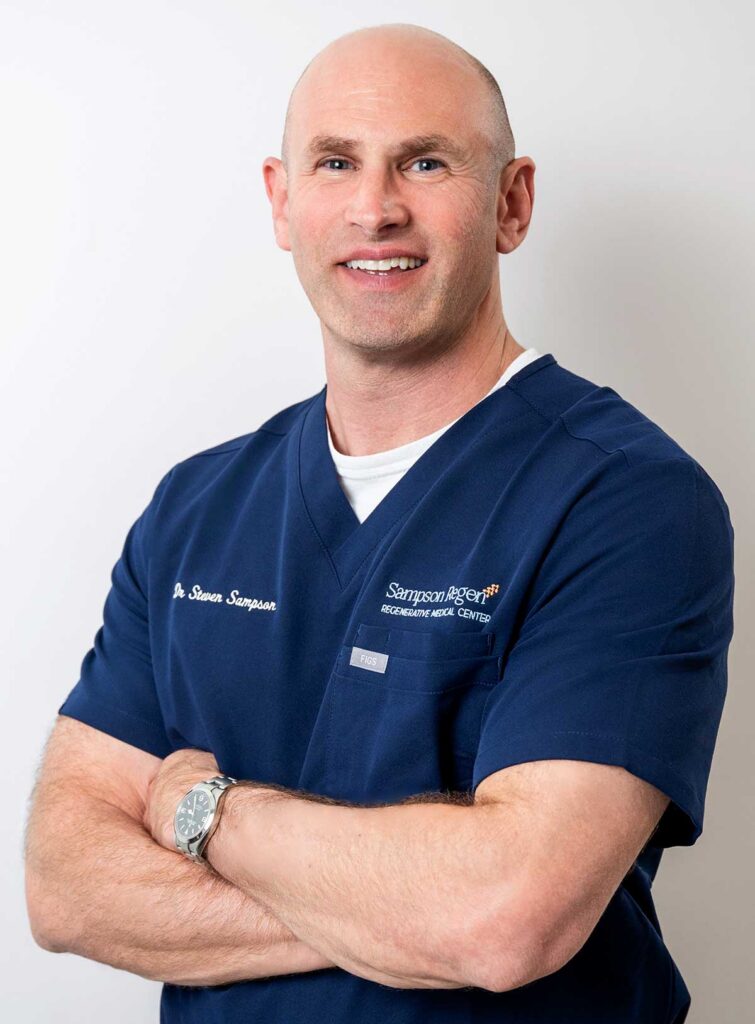
Dr. Steve Sampson
To help answer these questions, we spoke with Dr. Steve Sampson, a board-certified physician specializing in physical medicine and rehabilitation and a longtime leader in orthobiologics—the use of biological materials and other techniques to address musculoskeletal pain and injury.
His message is straightforward: regenerative medicine may help some patients reduce pain and improve function, but it is not a cure-all. Understanding the science, choosing the right candidate and finding a qualified physician are essential to making an informed decision.
What Is Regenerative Medicine?
“The human body is remarkable and can repair itself. We use the body’s own cells and tissues, from blood, bone marrow, fat or birthing tissue, to replicate that healing process and coordinate self-repair.” – Dr. Steve Sampson
Orthobiologic treatments are designed to influence the body’s healing and inflammatory responses. Among the most commonly discussed options are:
- Platelet-rich plasma (PRP): A sample of the patient’s blood is processed to concentrate platelets and plasma containing growth factors and other signaling molecules that may help reduce pain and inflammation.
- Bone marrow concentrate: Bone marrow, usually collected from the back of the hip, is processed to concentrate a mixture of cells and biological signaling factors that may influence inflammation and tissue repair.
- Fat-derived treatments: Tissue collected from areas such as the abdomen or flanks contains fat and associated biological components being used or studied for their potential effects on pain and inflammation.
These treatments are not interchangeable, and the evidence supporting them varies by condition. According to Dr. Sampson, PRP has the strongest evidence among orthobiologic treatments, including research supporting its use for certain patients with mild to moderate knee osteoarthritis, tennis elbow, plantar fasciitis and pain on the outside of the hip.
Importantly, reducing pain is not the same as regenerating cartilage. PRP has not been established as a way to restore a severely damaged joint to its original condition. Results vary, and researchers continue to investigate which patients benefit most.
Bone marrow and other approaches are also being studied, but the evidence is less established for many applications. A promising study or individual success story should not be mistaken for proof that a treatment will work for everyone.
The Goal: Better Function, Not a Magic Fix
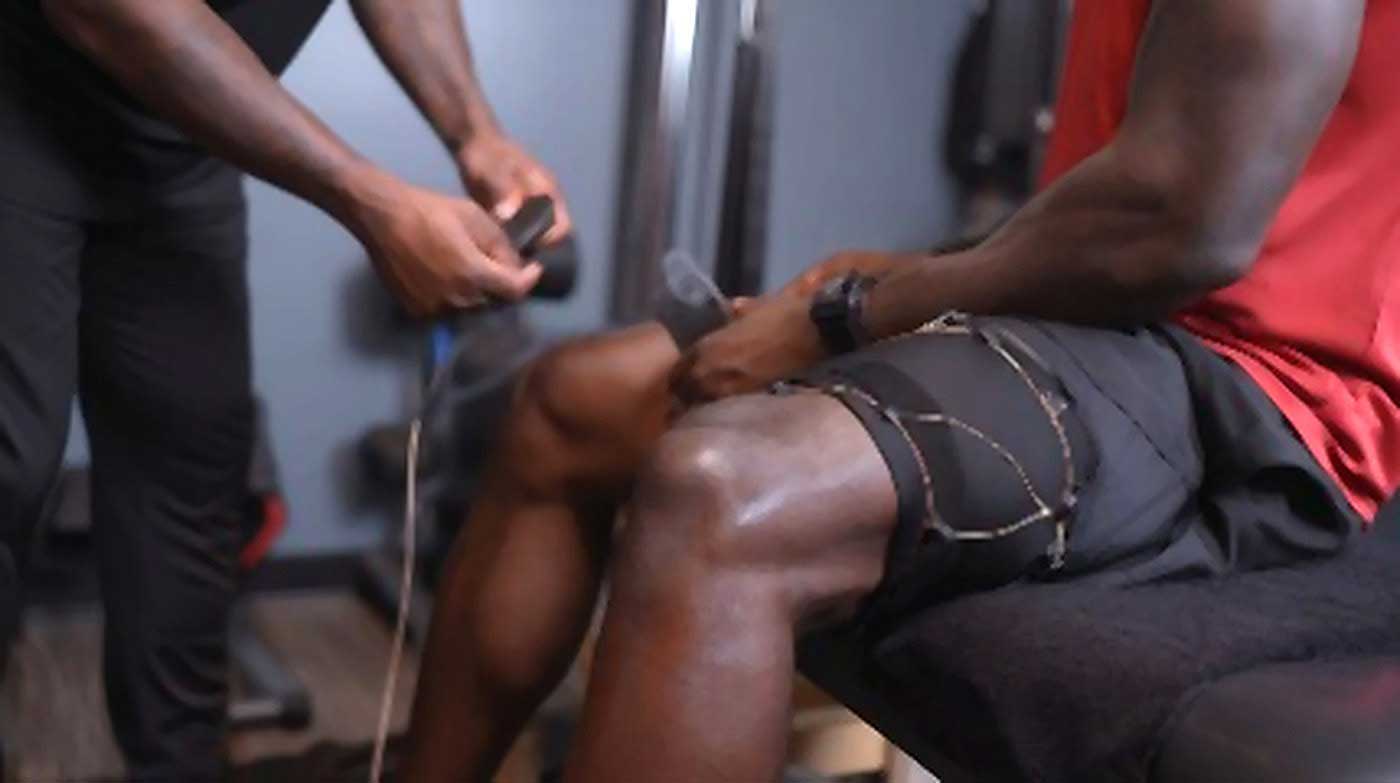
For former players, the most useful question may not be whether a treatment can rebuild a joint, but whether it can help them move with less pain and maintain the activities that matter to them.
“These cells are not magic pixie dust. You need to optimize the patient and select the right candidate.” – Dr. Steve Sampson
That means regenerative medicine should be considered as part of a broader plan—not a replacement for appropriate medical evaluation, rehabilitation, exercise or other recommended care.
Dr. Sampson says patients should also be prepared to wait for results. Improvement is not necessarily immediate. Some patients may notice changes within several weeks, while others may need up to three months or longer to assess the full effect.
In his practice’s registry, Dr. Sampson reports that benefits from PRP typically last one to two years, while bone marrow and fat-derived treatments, when effective, may last two to five years. These are observations from his practice, not guaranteed outcomes or universal estimates.
No injection can promise a particular result, and none should be presented as a guaranteed way to avoid joint replacement.
Your Whole-Body Health Matters
For athletes accustomed to pushing through pain, it can be tempting to focus exclusively on the injured knee, hip or shoulder. Dr. Sampson takes a broader view.
He says elevated blood sugar and insulin resistance can interfere with the body’s ability to heal and respond to treatment. Chronic inflammation and excess weight can also complicate recovery.
“Think of gardening. You want good soil, or nothing grows.” – Dr. Steve Sampson
Improving blood sugar management, addressing weight when appropriate and maintaining overall health can help create better conditions for recovery. These steps matter whether someone ultimately pursues regenerative medicine, physical therapy or another treatment.

Weight is particularly relevant to knee health. Reducing excess weight can lessen the mechanical load placed on the joints.
“A key point I always emphasize to my patients is that for every pound you lose, it’s four pounds of pressure off your knees.” – Dr. Steve Sampson
Research supports the idea: a 2005 study of overweight and obese older adults with knee osteoarthritis found that losing weight reduced the load on the knee joint. Dr. Sampson also stresses the importance of preserving muscle mass and evaluating the patient as a whole rather than treating an isolated joint.
This is especially important for alumni living with diabetes or insulin resistance. For more on the relationship between metabolic health and long-term well-being, see our American Diabetes Month feature.
Breaking the Pain–Inactivity Cycle
Pain can create a frustrating cycle: movement hurts, so activity declines; reduced activity leads to lost strength and conditioning, which can make everyday movement even more difficult.
For former players, stepping back from physical activity can also carry an emotional cost. Years of training may have made strength, endurance and physical toughness central to their identity.
“These warrior athletes are much like the veterans and soldiers we have treated. Mentally, they are used to being strong, and when they are injured they struggle with that identity.” – Dr. Steve Sampson
He adds that athletes may be reluctant to acknowledge pain, sometimes describing it as “discomfort” rather than admitting that something is wrong.
For appropriately selected patients, reducing pain may help make a return to movement possible. But treatment is only one part of the equation.
“The injections are a small part of getting you to launch. The rest is movement and exercise.” – Dr. Steve Sampson
The goal is not simply to feel better while sitting still. It is to work with a qualified medical team to restore function safely and build a sustainable routine of activity suited to the individual’s condition.
He also encourages patients not to ignore persistent symptoms. An ongoing ache, swelling or loss of mobility that does not resolve over several weeks deserves medical attention. A physician can determine whether imaging, such as an MRI, is appropriate and explain the available treatment options.
For former players with a history of ligament or meniscus injuries, early evaluation may be particularly valuable because these injuries can increase the risk of developing osteoarthritis later in life.
How to Protect Yourself From Overpromises
Regenerative medicine is a rapidly evolving field, but its popularity has also created opportunities for misleading marketing.
“It is a bit of the Wild West.” – Dr. Steve Sampson
Be wary of advertisements promising to regrow cartilage, reverse arthritis or guarantee a particular outcome. Claims that a single injection will restore a severely damaged joint or eliminate the need for surgery should prompt questions—not an immediate commitment.
Patients should also understand what is being injected. Products derived from another person’s tissues, including certain umbilical cord or amniotic products marketed as stem cell therapies, raise different regulatory and scientific questions from treatments prepared using a patient’s own blood or bone marrow. The legal status of a product depends on what it is and how it is used. FDA authorization and regulatory compliance should be verified rather than assumed.
Dr. Sampson recommends looking for a physician with relevant training and experience who takes time to explain the procedure, its limitations, potential complications and realistic alternatives.
Image guidance is another important consideration. Ask whether ultrasound or X-ray guidance will be used to direct the injection to the intended location.
Cost deserves particular attention. Dr. Sampson says most conventional health insurance plans consider these treatments experimental for many indications, leaving patients to pay out of pocket. Coverage varies by treatment, diagnosis and plan, so verify benefits directly with your insurer before proceeding.
Before You Say Yes: Questions Every Patient Should Ask
- Am I a good candidate, and what is my specific diagnosis?
- What exactly will be injected, and where does it come from?
- What evidence supports this treatment for my condition?
- How will the injection be performed?
- What are the risks, alternatives and realistic outcomes?
- How long might improvement take, and how long could it last?
- What is the total cost, and will insurance cover any portion?
- What training and experience does the physician have with this procedure?
- Can I discuss the recommendation with my regular doctor or seek a second opinion?
A responsible provider should welcome informed questions and give you time to make a decision.
A Long-Term Investment in Your Health

For NFL alumni, taking care of the body after football requires a different strategy than preparing for the next game. The objective is no longer to return to the field by Sunday. It is to preserve mobility, maintain independence and enjoy the years ahead.
Dr. Sampson encourages former players and their families to revisit their assumptions about available care. Medical options may have evolved since a patient last sought treatment, and a consultation with a qualified physician can help clarify what is appropriate. A consultation, however, is an opportunity to explore options—not an obligation to proceed with a procedure.
“Your body is your temple and your investment. You get one body, and the decisions you make about taking care of it influence the rest of your life.” – Dr. Steve Sampson
For those who spent years putting their bodies on the line for the game, that may be the most important play of all: make informed decisions, ask the right questions and build a health strategy that keeps you moving for the long haul.
About Dr. Steve Sampson
Dr. Steven Sampson is a board-certified physician in physical medicine and rehabilitation and a former Assistant Clinical Professor of Medicine at the David Geffen School of Medicine at UCLA. He is the founder and medical director of Sampson Regen Regenerative Medical Center in Los Angeles, where he specializes in non-surgical treatments for sports injuries, spine conditions, and arthritis, including regenerative medicine and orthobiologic therapies.
An early pioneer in the clinical use of platelet-rich plasma (PRP) for orthopedic conditions, Dr. Sampson has authored more than 40 peer-reviewed publications and textbook chapters. In 2007, he founded The Orthobiologic Institute (TOBI), an international physician education organization whose annual conferences and hands-on training programs have reached physicians from more than 80 countries. He is also a co-founder of the Ortho Healthspan Alliance, a physician-led network focused on advancing regenerative orthopedics and musculoskeletal health.
Editorial note: This interview has been edited for length and clarity. Dr. Sampson’s views are his own. Evidence varies by condition and treatment, and outcomes are not guaranteed. This article is for educational purposes only and is not medical advice or an endorsement of any treatment or provider. Consult your own qualified physician before making treatment decisions.
Disclosure: Dr. Sampson owns and leads Sampson Regen, founded TOBI, and is a founder of the Ortho Healthspan Alliance, a physician-owned business organization whose member practices are shareholders. TOBI co-hosts its annual conference with the Interventional Orthobiologics Foundation, whose president is also an Alliance founder, according to the Alliance’s website. NFL Alumni Health receives no payment or other benefit from Dr. Sampson or these organizations.
Highlights from the November 2026 Newsletter:
- Playing the Long Game: The Retired Athlete’s Playbook for Regenerative Medicine
- Dr. Steve Sampson: 5 Questions About Regenerative Medicine
- Regenerative Medicine for Football Bodies: What Works, What Doesn’t, and How to Tell
- American Diabetes Month: What Every Alumnus Should Know
- Family Caregivers Month: Behind Every Player Is a Support Team
- JOIN THE HUDDLE: Free Newsletter Sign-Up